
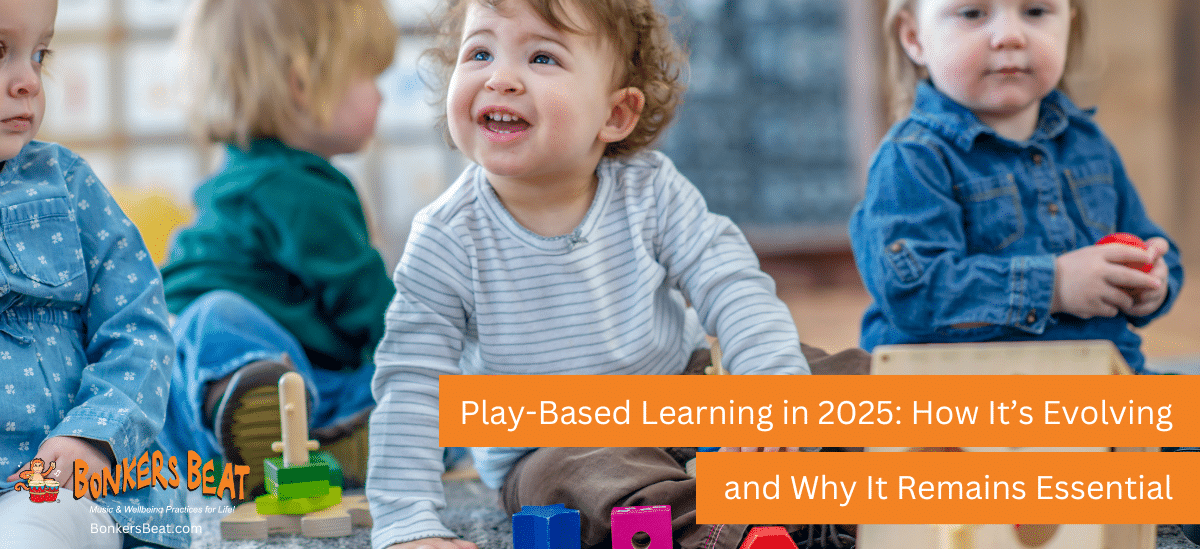
Play has long been the cornerstone of quality early childhood education in Australia and in 2025, its importance is clearer than ever.
As research continues to affirm the value of play in fostering holistic development, educators and services are evolving how play-based learning is implemented to meet the needs of today’s children and families.
How Play-Based Learning is Evolving
In 2025, play-based learning continues to embrace the foundations of exploration, imagination, and inquiry but with added depth and intentionality. We’re seeing:
- Greater focus on inquiry-led play, encouraging children to ask questions, investigate ideas, and co-construct knowledge with educators
- Increased integration of STEM and nature play, allowing children to engage with the environment, test ideas, and build critical thinking skills
- Embedding social and emotional learning, using play to develop resilience, empathy, and self-regulation through role play and group experiences
- Intentional teaching within play, where educators scaffold learning and extend children’s ideas in alignment with curriculum outcomes
Digital tools are also being thoughtfully included in some play environments, supporting storytelling, creativity, and early digital literacy, but importantly used with hands-on, physical exploration.
Why Play-Based Learning Remains Essential
Backed by decades of research and policy, play continues to be recognised as the most effective way for young children to learn. Through play, children naturally develop:
- Social capabilities: Communication, turn-taking, conflict resolution
- Cognitive skills: Language, numeracy, problem-solving
- Physical coordination: Fine and gross motor development
- Emotional wellbeing: Confidence, coping strategies, emotional awareness
Far from being just playing, these experiences lay the foundation for lifelong learning and wellbeing.
Alignment with the National Quality Standard (NQS)
Play-based learning directly supports several key areas of the National Quality Standard, including:
- Quality Area 1 – Educational Program and Practice: Programs must be child-centred, responsive, and based on children’s active engagement and play.
- Quality Area 5 – Relationships with Children: Play supports respectful, responsive relationships that foster a sense of security and belonging.
- Quality Area 6 – Collaborative Partnerships with Families and Communities: Play provides a bridge between home and centre life, allowing family experiences and culture to be reflected in children’s learning.
Play-based learning is also embedded in the Early Years Learning Framework, which highlights the significance of play in achieving learning outcomes.
Supporting Play in Your Centre
How can you strengthen play-based learning in your service? There are many ways, but just a few ideas to explore are:
~Provide open-ended materials and natural environments to promote discovery, creativity and problem-solving
~Encourage child-led exploration while integrating intentional teaching to extend learning in meaningful ways
~Support your team with ongoing professional development and access to proven programs that align with play-based approaches
~Create calm, flexible routines that allow for periods of uninterrupted play
~Use music and movement to support sensory regulation, imagination and connection
~Incorporate play into transitions and routines, making every moment a learning opportunity
~Make time for reflective practice, encouraging educators to discuss what they’re noticing in play and how to respond with intention
At Bonkers Beat, we champion play through our music, movement, and wellbeing programs, designed to enrich early learning experiences and support NQS achievements. Our approach helps educators embed play-based learning with confidence, creativity, and purpose.
Let’s continue to honour play as the powerful, brain-aligned, and joyful foundation of early childhood education, because play isn’t just preparation for learning. It is learning.