Supporting Language Development in the Early Years

Language development is one of the most crucial aspects of early childhood, laying the foundation for a child’s future communication skills, social interactions and even future academic success. 

During the first few years of life, children’s brains are like sponges, rapidly absorbing and processing the language and communication cues from their environment. As educators and parents, we play a pivotal role in nurturing this development, helping children to become confident communicators.

The Importance of Early Language Development

In the early years, language development is not just about learning words; it’s about understanding and using language to express thoughts, needs and emotions. Strong language skills in early childhood are linked to better cognitive abilities, improved social skills and a higher level of literacy later in life. 

Children who develop robust language skills early on are also equipped to navigate social interactions, understand and follow instructions, and express themselves clearly and effectively.

It’s important to understand how language development is deeply intertwined with emotional and social growth. As children learn to communicate, they also learn to connect with others, building relationships and developing empathy. The ability to express oneself and understand others is fundamental to a child’s overall wellbeing and success.

Practical Tips for Fostering Language Development

Engage in Conversations:

Regularly engage in conversations with your child — even babies! Talk about what you’re doing, ask questions, and listen to their responses, even if they are non-verbal. This constant exchange of words helps children understand the rhythm and flow of language.

Read Together Daily:

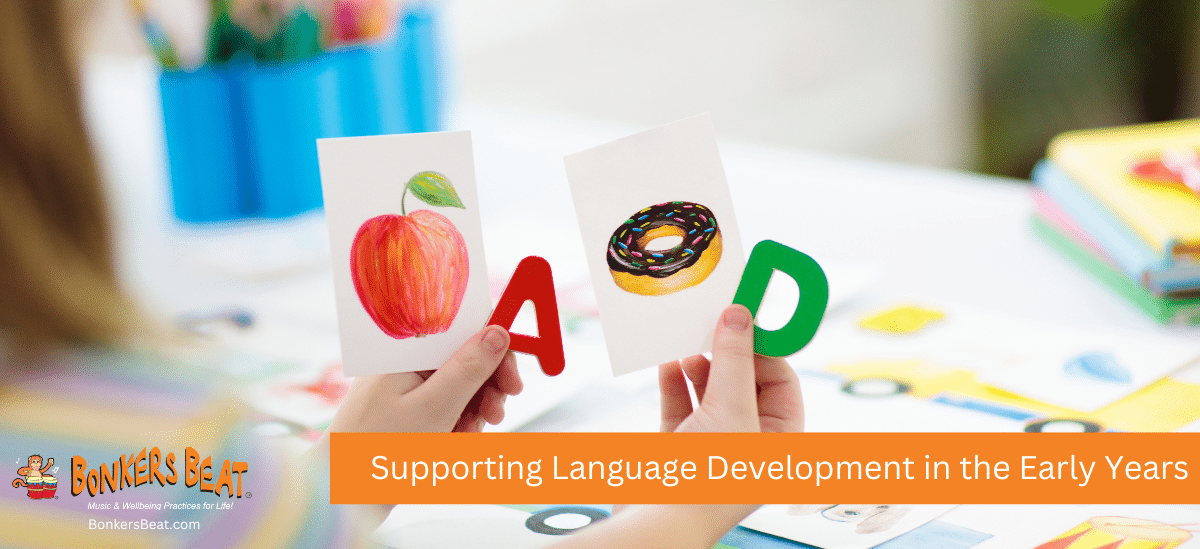
Reading books together is one of the most effective ways to support language development. Choose engaging, age-appropriate books and make reading a daily routine. Discuss the story, ask questions, and encourage your child to point out pictures and repeat words.

Play Word Games:

Integrate language into playtime with word games, songs, and rhymes. Games like “I Spy” or singing nursery rhymes introduce new vocabulary and reinforce language structures in a fun, interactive way.

Narrate Daily Activities:

Narrating daily activities, like cooking or cleaning, helps children learn new words and phrases in context. Describe what you’re doing and invite your child to participate, enhancing their understanding and use of language in everyday situations.

Encourage Social Interaction:

Provide opportunities for your child to interact with peers. Social play encourages children to communicate, negotiate, and collaborate, which are all essential language skills.

Supporting language development in the early years is a rewarding journey that sets the stage for a child’s future success. By incorporating language-rich interactions into everyday activities and play, we can help children build the communication skills they need to thrive both now and in the future.

We have plenty of activities and songs to help enhance children’s language development in early childhood education. Take a look here for our educational resources and some affordable activity packs too: https://www.bonkersbeat.com/bonkers-beat-shop/

If you’d like to enhance your curriculum even further, our award-winning early childhood programs are exactly what you need! Learn more about Bonkers Beat Programs here and consider the free trial. 

Share This

Related Posts