
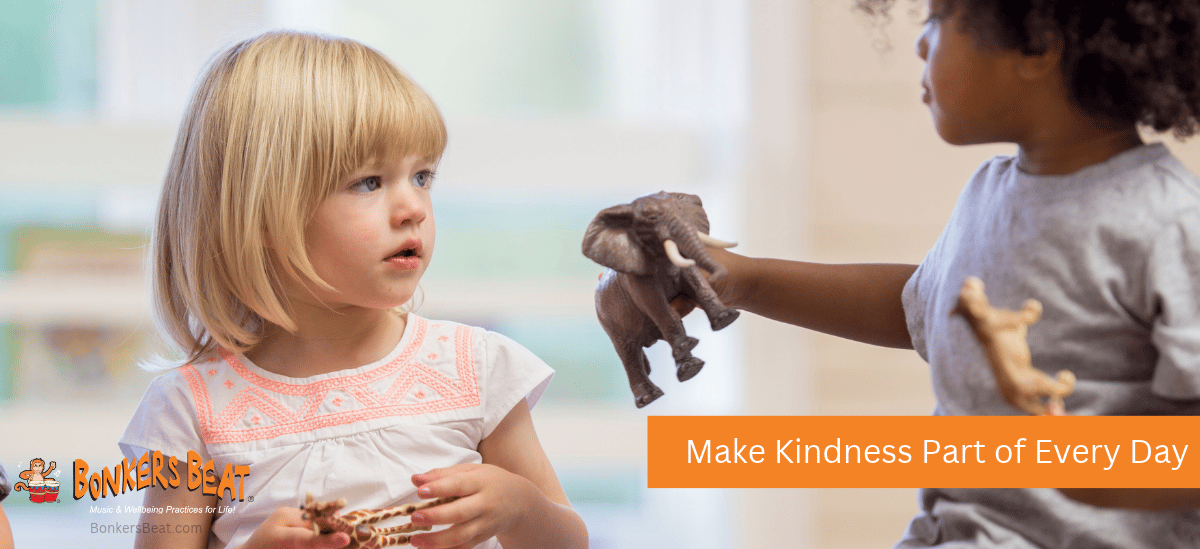
Make Kindness Part of Every Day

“Be kind” is something we say often in early childhood education. But for a young child, it can be a fairly puzzling instruction. What does being kind actually mean when someone has the toy you wanted?

This week, World Kindness Day on 13 November is an opportunity to make kindness more understandable for children and more deliberate in our early learning environments.

That means showing children what kindness looks like, giving them opportunities to practise it and noticing when it happens. It also means considering how we treat the adults in our communities. Kindness should be something everyone at a service experiences.

Why kindness deserves our attention

Kindness can make an immediate difference to someone’s day. In early childhood, practising it also contributes to learning and relationships.

  • It helps children develop empathy: Noticing that someone needs help encourages children to consider feelings and experiences beyond their own.
  • It supports friendships: Inviting someone into a game or helping them with a task gives children practical ways to connect.
  • It strengthens belonging: Being welcomed and included helps children feel that they have a place in the group.
  • It gives children a sense of contribution: Even a young child can experience the satisfaction of doing something useful for someone else.
  • It benefits educators and families: A thoughtful response or offer of help can ease a difficult moment and build trust within the service.

7 simple ways to centre kindness at your service

  1. Explain & show what kindness looks like

Use specific examples during the day so children can connect the idea of kindness with an action.

Instead of simply saying “That was kind”, try: “You found a paintbrush for Alex so he could join in.”

When support is needed, offer a practical suggestion: “Layla’s blocks have fallen. Shall we ask if she would like some help?” Asking first also shows children that helping involves listening to what someone wants.

  1. Build opportunities to help into routines

Give children meaningful jobs that contribute to the group. They could help prepare the snack table or show a new child where to find their hat.

Keep tasks manageable and offer support where needed. Make sure helping opportunities are available to everyone, including younger children and those who may be less likely to volunteer.

  1. Make inclusion something children can practise

Help children find the words to welcome others: “Would you like to play?” or “You can sit here.”

Look at your room setup, too. An extra chair at the drawing table can make joining in easier. A shared building project can give children a reason to work together, with an educator nearby to support negotiations.

Respect children who prefer to watch before participating. An invitation should leave room for them to choose.

  1. Use role play and stories to explore tricky situations

Choose a book in which a character feels left out or faces a disagreement. Pause at the point where someone could help and ask, “What could they do next?”

You could also act out a familiar situation with puppets, such as two characters wanting the same instrument. Invite children to suggest a response, then let the puppets try it. This makes the discussion concrete and gives children language they can use themselves.

  1. Celebrate kindness without making it a competition

Create a display with children’s drawings and comments about kindness they have experienced or noticed. A simple prompt could be: “Someone helped me when…”

Add examples as they happen and revisit them together. Avoid tallying each child’s good deeds – just focus on the action and the difference it made.

  1. Help children put things right

Disagreements are opportunities to teach kindness with support. Once children are calm, help them work out what could repair the situation.

If a child has knocked over someone’s tower, they might offer to rebuild it. If they have hurt someone, they can check whether that person needs help, with an educator’s guidance.

A prompted “sorry” alone doesn’t teach children what to do differently. Give them a practical next step, while remembering that these skills take time to develop.

  1. Extend the same care to adults

Make kindness part of how the team works together. Thank a colleague for something specific. Check in after a challenging morning and follow through when you offer support. Take a similar approach with families.

Children see these exchanges. The way adults treat one another gives weight to what we teach.

This World Kindness Day, let’s celebrate kindness in all forms, and look for everyday opportunities to put kindness into practice at your service. Small gestures matter, and children learn so much from the care they experience themselves.

Share This

Related Posts

Planning Your SRF? We’ve Made It Easy for You!

As Victorian early childhood services prepare their School Readiness Funding (SRF) plans, it’s time to consider a program that delivers meaningful learning experiences while making educators’ lives easier. What if music could become one of your most powerful everyday teaching…
Read More