
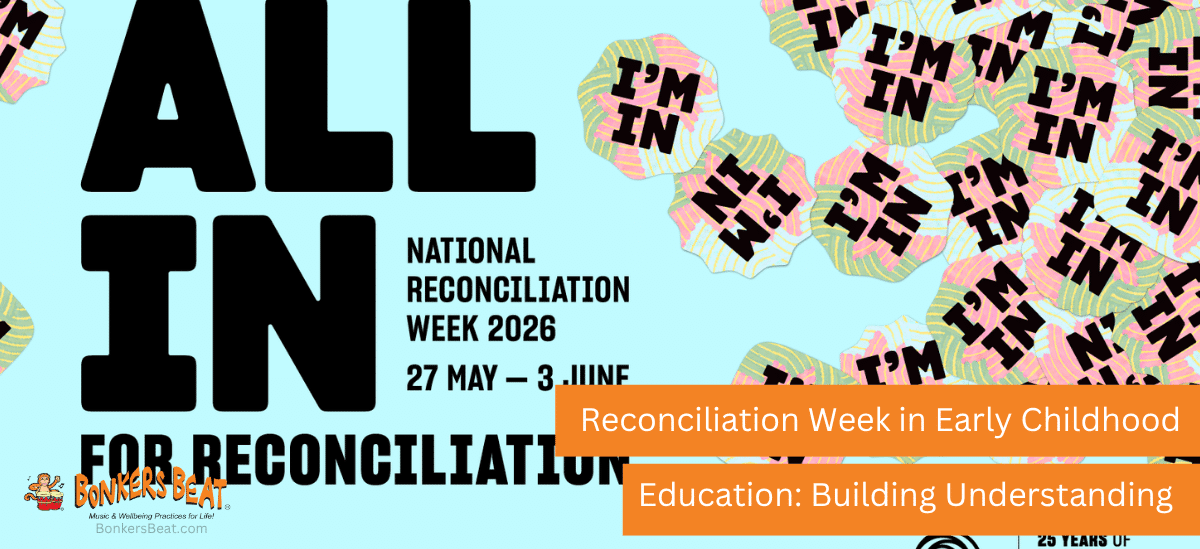
Reconciliation Week, held from May 27 to June 3, is an important time for reflection, learning, and connection across Australia.
It begins with National Sorry Day on May 26, a day that acknowledges the Stolen Generations and the ongoing impact of past government policies on Aboriginal and Torres Strait Islander peoples.
In early learning settings, these dates offer an opportunity to approach reconciliation in a way that is meaningful, respectful, and appropriate for young children.
What reconciliation can look like in early childhood education
Reconciliation in early childhood isn’t about delivering complex history lessons.
It’s about building awareness, respect, and a sense of connection from the very beginning.
At its core, it can be as simple as:
• Introducing children to Aboriginal and Torres Strait Islander cultures
• Creating opportunities for curiosity and conversation
• Embedding respect for Country, culture, and community into everyday practice
These early experiences help shape how children understand the world around them, and the people within it.
Acknowledging Sorry Day and Reconciliation Week with care
National Sorry Day and Reconciliation Week are significant and can be sensitive times.
In early learning settings, it’s not necessarily about explaining the full history, but about approaching the idea of kindness, fairness, and inclusion in a way children can understand.
This might look like:
• Talking about caring for one another
• Exploring the idea of saying sorry and making things right
• Reading age-appropriate stories that reflect empathy and understanding
• Celebrating the incredible culture of our First Nations people
Embedding reconciliation into everyday practice
Like many cultural calendar dates, Reconciliation Week is a moment in time, but its intent should extend beyond a single week.
Simple ways to embed this into your program include:
• Incorporating Aboriginal and Torres Strait Islander perspectives into stories, music, and art
• Exploring connection to land through nature-based experiences
• Using language that reflects respect and inclusion
These don’t need to be one-off activities. When they become part of the everyday rhythm of the room, they feel more authentic and impactful.
A small step with lasting impact
Reconciliation begins with understanding.
In the early years, that understanding starts with small, everyday moments including the conversations we have, the experiences we create, and the respect we model.
To celebrate Reconciliation week, Australian heritage and embed indigenous perspectives in any Early Childhood, kindergarten or school setting, explore this perfect tool, Australian Aboriginal Symbols pack.
Reconciliation Week is an opportunity to pause and reflect, but also to continue building a foundation that supports inclusion, awareness, and respect long beyond the week itself.