

Science Week in Early Childhood Education

Science Week is coming up from August 9 to 17 this year, so what better time to inspire a love of curiosity and discovery for children in early childhood education!

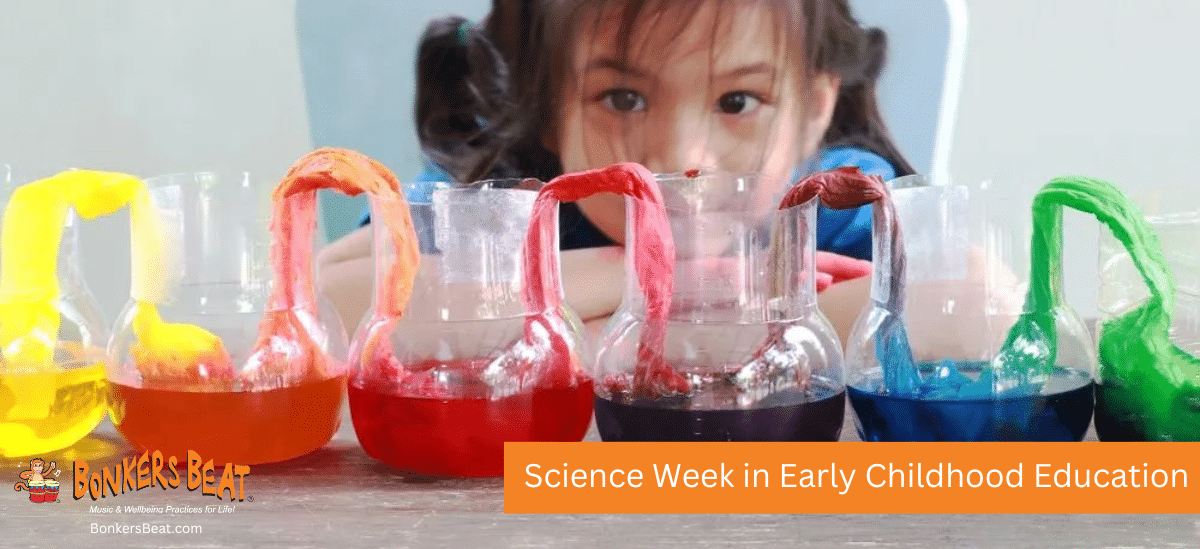
Science is all around us, from watching water disappear when it evaporates, to noticing how plants grow or exploring colour. Bringing that everyday scientific wonder into early learning is simple, engaging and lots of fun.

Here are some easy and exciting ways to explore science with young children:

Senses in Action

Experiment with texture, temperature and scent using ice, slime, or scented playdough. Prompt curiosity with questions like “What do you feel?” or “What do you notice?”.

Explore all six senses of sight, hearing, smell, taste, and touch and think about how each makes you feel.

Growing Experiments

Plant seeds in transparent cups or jars with cotton wool or soil so children can observe the roots and shoots as they grow. 

Choose fast-growing seeds like beans or peas for quick results. Each day, children can monitor changes: spotting when the roots start to stretch down or when the first green shoot appears.

This hands-on experience teaches children about what plants need to survive, like sunlight, water, and time. 

Colour and Light Play

Ready to make a rainbow? This magical activity is always a hit and a great way to explore light and colour. All you need is a glass of water, a small mirror, and sunlight (or a strong torch if you’re indoors). Place the mirror in the glass of water at an angle and position it so sunlight hits the mirror. With a bit of adjusting, you’ll see a rainbow appear on the wall or a sheet of white paper. 

Talk to children about what they see: “What colours can you spot?” “What do you think makes the rainbow appear?” This is a simple yet powerful way to introduce children to the concept of light refraction in an age-appropriate, awe-inspiring way.

For younger children, have fun with colours by mixing different colours to explore how colours change when combined.

Sink or Float?

A tub of water and a handful of household objects creates an instant science experiment. Will it sink or float? Why? Let children guess and test!

Science activities like these don’t need to be complicated. With a few everyday materials and some thoughtful questions, you can support children’s natural curiosity and help them develop critical thinking, language and early STEM skills.

Even better, science in early learning supports play-based, hands-on experiences that build confidence and a love for learning that lasts.

Need inspiration? The Fly My Kite pack on the Bonkers Beat Shop offers downloadable activity fun to spark curiosity and creativity in your centre. Fun, easy, and ready to use!

Share This

Related Posts