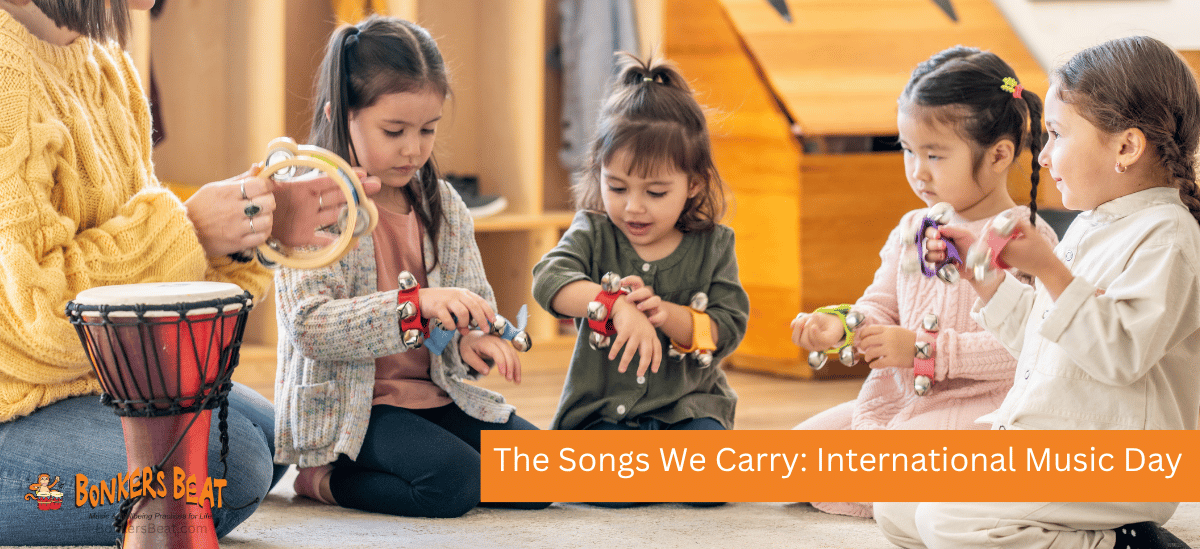
The Songs We Carry: International Music Day

Long before children can read the words of a song, they can join in with its rhythm, actions and familiar sounds.

Ask a child for their favourite song and you might get a whole concert. It could be a family favourite from the car, a song from kinder that has travelled into the kitchen, or a lullaby passed down through generations.

On 1 October, International Music Day, we celebrate the music woven through children’s lives—and the learning, connection and memories it can create.

What music brings to early learning

When children sing, move and make music together, there is much more happening than we can hear.

These experiences give children opportunities to:

  • Develop language: Explore rhymes, repeat words and listen closely to sounds.
  • Practise memory and attention: Remember lyrics, anticipate actions and follow a rhythm.
  • Express feelings and ideas: Sing, hum, dance, tap or listen in their own way.
  • Connect with others: Take turns, respond and enjoy creating something together.
  • Explore movement: Clap, sway and coordinate actions with music.
  • Build belonging: Hear familiar songs and home languages while discovering those of other families.

Music can be woven into everyday learning: a counting song, a rhythm tapped outdoors or a familiar melody that helps children move from a busy activity to a quieter moment.

For educators: Let children bring the music

International Music Day is an invitation to listen to the music children already carry with them.

Ask families to share a favourite lullaby, a rhyme in their home language or a song that gets everyone dancing. Invite children to teach the group an action, a word or a rhythm.

Some children will lead enthusiastically. Others will prefer to watch or listen before joining in. All these responses have a place.

Notice children’s original music, too. A few claps might become a pattern; a made-up tune might turn a walk across the room into a parade. Responding to these small beginnings encourages children to explore and develop their ideas.

For families: Music matters at home

Your child does not need a perfect singing voice. They need the connection that comes from sharing music with you.

Singing together creates opportunities for eye contact, conversation, laughter and closeness. Familiar songs can bring comfort, while action songs invite movement and play. Repeating favourite songs also gives children time to practise words, remember sequences and grow confident enough to lead.

Music at home can be simple:

  • Sing through everyday routines: Make up a little song while getting dressed or packing away toys.
  • Let your child be the teacher: Ask, “What did you sing at kinder today?” and learn the actions together.
  • Share your childhood favourites: Include songs in your home language and invite grandparents to contribute.
  • Make music together: Clap a pattern, tap your knees or take turns inventing a rhythm.
  • Create a calming ritual: Share a gentle song at bedtime or during a quiet cuddle.

A favourite recording is a wonderful starting point. Sing along, move together and pause to let your child add their own ideas. Those shared moments make the music personal.

Carry the music beyond today

At Bonkers Beat, music is woven into how children learn, grow and connect—every day.

This International Music Day, share a song you remember, learn one your child loves and leave room for something new. It might become the song your family carries for years.

Educators can explore our Music and Wellbeing Programs for more ways to bring music into everyday learning.

Bring Bonkers Beat into your home or early learning setting: listen to our original songs on Spotify.

Share This

Related Posts