
Every kinder offers toys, books and learning experiences. But the very best environments have something more. They create a place where children feel safe, curious, confident and excited to learn.
When you’re visiting a centre, look beyond the facilities. Pay attention to how the children interact, how educators respond and how the environment makes you feel.
Here are four things worth looking for.
Listen for the Sound of Learning
When you visit a centre, pause for a moment and simply listen.
What do you hear?
Are children chatting, laughing, singing and exploring? Do educators speak warmly and respectfully? Can you hear children confidently joining in, rather than just watching from the sidelines?
The sounds of a kinder can tell you a lot about the learning taking place.
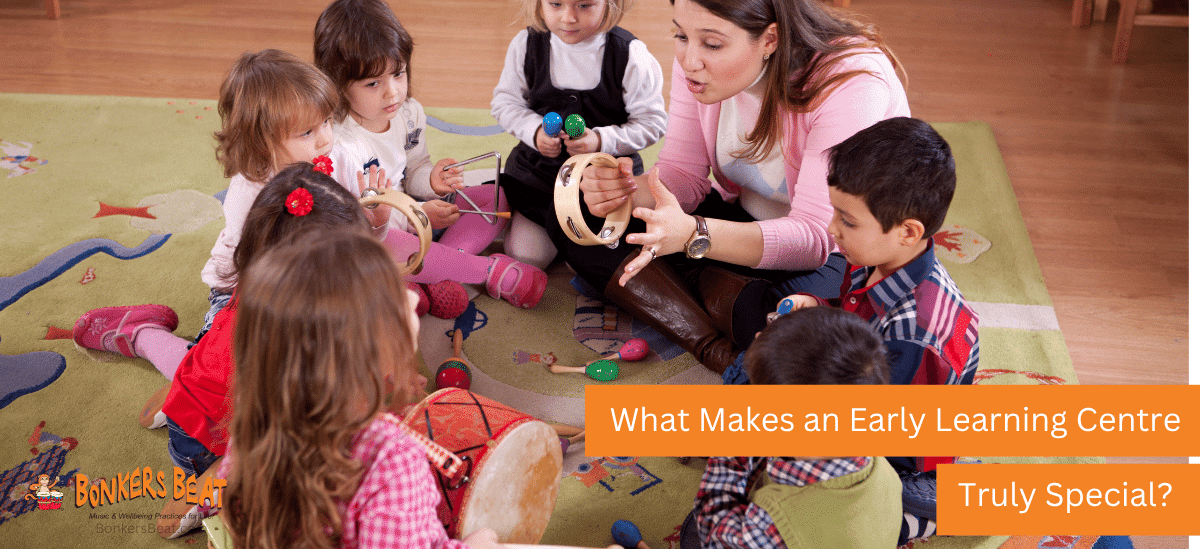
When music is woven into everyday experiences—not just saved for special occasions—it becomes a powerful tool for learning. Through singing, movement, rhythm and percussion, children naturally develop language, memory, listening skills, coordination, creativity and self-confidence. Music also helps children recognise patterns, strengthen early literacy and numeracy skills, regulate their emotions and build meaningful connections with others.
Most importantly, music makes learning joyful. When children are engaged, having fun and actively participating, they’re more likely to remember what they’ve learned and develop a lifelong love of learning.
Watch how children are learning
Instead of asking, “What activities are on today?” ask yourself:
“Are the children genuinely engaged?”
In a high-quality learning environment you’ll often see children making choices, asking questions, solving problems and becoming absorbed in play.
These moments build independence, creativity and confidence—skills that prepare children not only for school but for life.
Notice how children are supported
Young children experience big emotions every day.
Look for educators who help children recognise their feelings, solve problems together and develop confidence, rather than simply managing behaviour.
Many centres also include wellbeing practices such as mindfulness, yoga or relaxation activities that help children develop emotional regulation and resilience.
When children feel safe, settled and supported, learning happens naturally.
Look for genuine relationships
One of the strongest indicators of a great kinder is the quality of the relationships.
Do educators know the children well? Are they listening, encouraging and celebrating each child’s interests?
Do the children appear relaxed and comfortable with the adults around them?
Strong relationships create the secure foundation children need to thrive.
Seeing is believing… join us for a Music Kinder Tour
No brochure or website can fully capture what a learning environment feels like.
That’s why visiting a service is one of the best ways to decide if it’s the right place for your child. Walk through the rooms. Observe the interactions. Ask questions. Trust your instincts.
If you’d like to experience these qualities in person, we’d love to welcome you to one of our upcoming Bonkers Beat Music Kinder Tours.
Come and explore our learning spaces, meet our passionate team and see how music, creativity and wellbeing are woven into everyday learning.
Music Kinder Tour: Inspiring Young Minds
- Tuesday 21 July, 9.30am
- Thursday 30 July, 9.30am
Places are limited, so please reserve your free tour today.
We’d love to meet you and your family.