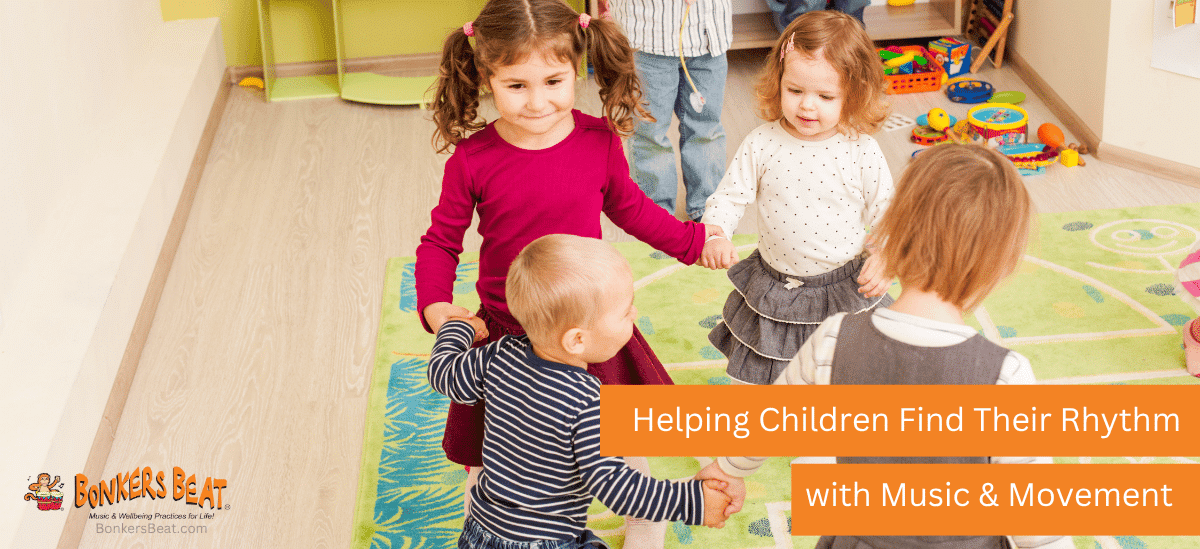
Have you ever watched a child hear a song they love? Their shoulders start bouncing, their feet get involved and before you know it there’s a full-body dance happening in the middle of the kitchen, lounge room or early learning centre!
Children have a wonderfully natural response to music. They clap, wiggle, stomp, spin and sing often without any encouragement, joining in with friends and carers.Â
There’s a lot happening in that little dance party. Singing and dancing might look like pure fun, but children are practising all kinds of skills along the way!
They’re listening for changes in rhythm. Watching other people’s responses. Remembering words and movements. Coordinating their bodies. Following instructions. Waiting for their turn. Experimenting with language and expressing emotions they may not yet know how to explain.
Music and movement can help children:
- Build coordination, balance and body awarenessÂ
- Strengthen listening and memoryÂ
- Explore language, rhyme and new vocabularyÂ
- Express feelings and release energyÂ
- Develop confidence and creativityÂ
- Connect with other children and adultsÂ
That’s a fairly impressive list for something that can be achieved with a saucepan and wooden spoon!
Make everyday moments musical
Because you don’t need a formal lesson or a perfectly planned activity to bring more music into a child’s day, there is no excuse to go a day without it!Â
Here are a few ways to bring music into children’s early learning:
- Turning everyday routines like handwashing, packing away or getting dressed into songs
- Playing freeze dance and experimenting with fast, slow, high and low movements
- Turning names, instructions or silly phrases into new lyrics for familiar songs
- Exploring sound with pots, wooden spoons, homemade shakers and other simple instruments
- Clapping a rhythm and inviting children to clap it back
- Letting children choose the music or invent a movement for everyone to copy
- Asking children how a piece of music makes them feel and how it makes them want to move
Be prepared though – you may be asked to play the same favourite song seventeen times. Repetition is part of the magic!
Not every child wants centre stage
Some children will happily perform for anyone who glances in their direction, but others need time and that’s ok.
They might watch from the edge, hold an instrument without playing it or quietly copy one movement when they think nobody is looking.Â
Keep the invitation open without turning it into pressure. Sing beside them, offer an item to join in with and let them choose whether they sit, stand, move or simply listen.
Find your Bonkers Beat
The Bonkers Beat Music Program helps early learning services embed music and movement throughout the day with original songs, video demonstrations, lesson guides, transitional music, educator training and resources for families.
To see the magic of music in action, families can sing and move along with Bonkers Beat on YouTube, or experience it for yourself by joining one of our upcoming Music Kinder Tours at Bonkers Beat Music Kinder, Aspendale.
However children choose to join in, keep making room for the singing, swaying, stomping, twirling and everything in between. When familiar songs are enjoyed at home and in early learning settings, children get to carry that confidence with them.Â