
R U OK Day in Early Childhood

Asking how someone is tends to be an auto-pilot question. Similarly, the response tends to be the same. Good, fine, not bad – then the moment passes.

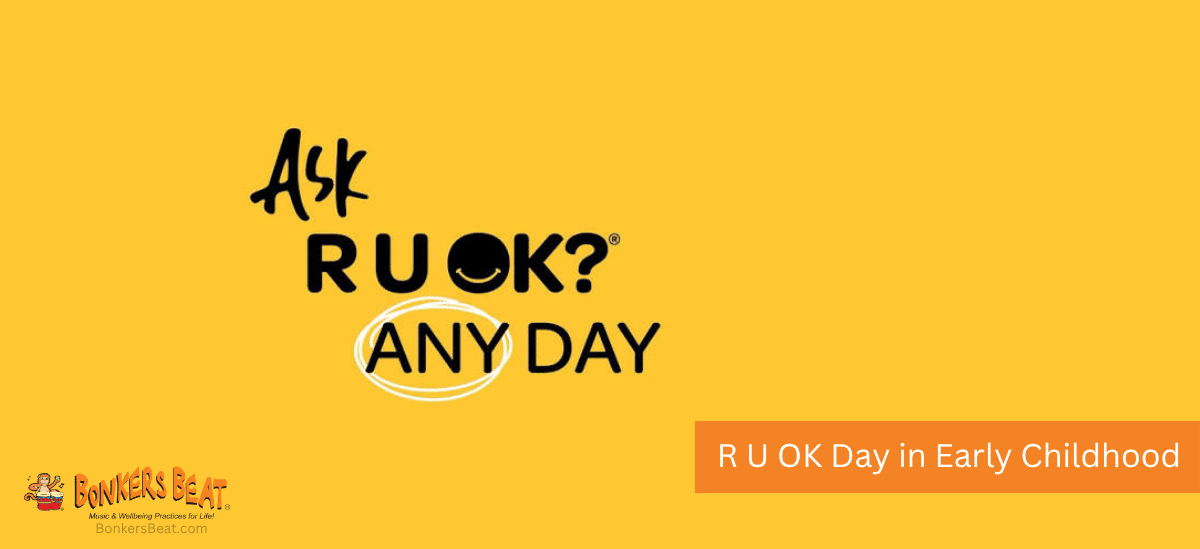
R U OK? Day on Thursday 10 September 2026 invites us to slow that moment down. And this year’s message, Ask R U OK? Any Day, is an important reminder that meaningful connection belongs in any moment.

In early childhood communities, that message reaches in two directions.

1: It asks us to notice and support the adults around us, and
2: It reminds us to create spaces where children can express how they feel and know that trusted adults will listen.

Starting with the grown ups

Early childhood education is full of warmth, joy and connection. It can also be physically tiring and emotionally demanding. Educators support children, reassure families, manage busy rooms and respond to countless needs throughout the day. Parents and carers may be carrying pressures that are invisible at drop-off.

A genuine check-in can create a little breathing room. Make eye contact during a greeting and ask someone. If someone says they are not OK, you do not need to have the perfect words or solve everything. Listening calmly and helping them identify appropriate support can be enough to make the next step feel possible.

R U OK? suggests four simple steps: Ask, listen, encourage action and check in.

The final step matters! A message or quiet conversation a few days later shows that the first question was more than a gesture.

What this looks like for young children

For young children, ‘Are you OK?’ may not produce a neat answer.

Feelings often appear through behaviour, play, movement, tears, withdrawal, clinginess or a sudden change in energy. Children may not yet have the words to explain what is happening.

Our role is not to make children responsible for managing somebody else’s mental health. It is to help them recognise emotions, practise kindness, ask for help and experience what it feels like to be heard.

Simple ways to make space for feelings

Begin with a small check-in. Invite children to choose a face, colour, picture or movement that matches how they feel today. Speaking can be optional. The activity should open a door, not put a child on the spot.

Use stories and puppets. A character who feels worried, left out, cross or quiet gives children a safe way to explore what might be happening. Ask what the character could say and which trusted adult might help.

Let music and movement do some of the talking. Children can move like different feelings, choose music that matches their energy or use a familiar song to settle together. Expression does not always begin with a conversation.

Model honest, age-appropriate language. An adult might say, ‘I’m feeling a little frustrated, so I’m going to take a slow breath and try again.’ Children learn that difficult feelings are allowed and that support and coping strategies are available.

Come back later. A child who does not want to talk now may be ready during a quieter moment, while drawing, walking or packing away. Gentle follow-up builds trust.

Keep the conversation going

At Bonkers Beat, wellbeing is woven through music, movement, play and the relationships children build each day. R U OK?Day gives us a prompt, but the real work happens in the familiar moments that follow: noticing a quieter colleague, sitting beside a child, making room for an honest answer and checking in again.

R U OK Day has a bunch of great resources specifically for early childhood age here.

Share This

Related Posts

So Much to Say Thank You For!

There’s a lot that happens in an early learning day. A child finds the courage to join in. A new friendship begins. A tricky feeling becomes a little easier to understand. Alongside those moments are educators who know when to…
Read More